Introduction
Sodium bicarbonate is the scientific name for baking soda.
The chemical formula for sodium bicarbonate is: NaHCO₃
It is made of:
- Na = sodium
- H = hydrogen
- C = carbon
- O₃ = three oxygen atoms
Sodium bicarbonate is used as an ergogenic aid to improve endurance. According to the AIS it is classified as a Group A ergogenic aid, due to strong scientific evidence for use in endurance sport using evidence-based protocols.
Mechanisms for bicarbonate absorption
Sodium bicarbonate dissolves readily in water. When it comes into contact with fluids, including gastric acid, it rapidly dissociates into sodium ions (Na⁺) and bicarbonate ions (HCO₃⁻). The main reactions can be summarised as follows [2]:
NaHCO₃ → Na⁺ + HCO₃⁻
HCl + Na⁺ + HCO₃⁻ → Na⁺ + Cl⁻ + H₂CO₃
H₂CO₃ → CO₂ + H₂O
In the stomach, some of the bicarbonate reacts with gastric acid to form carbonic acid (H₂CO₃), which then breaks down into carbon dioxide (CO₂) and water. Because CO₂ is a gas, it can leave the stomach contents and be expelled from the body. This helps explain common gastrointestinal side effects of sodium bicarbonate supplementation, such as belching and bloating. Higher doses of sodium bicarbonate produce more CO₂, which may increase the likelihood or severity of these symptoms.
Although some bicarbonate is consumed during the neutralisation of gastric acid, sodium bicarbonate can still increase bicarbonate levels in the blood. One contributing mechanism is the response of parietal cells to changes in gastric pH. As gastric acidity is reduced, parietal cells secrete hydrogen ions (H⁺) into the stomach lumen via the H⁺/K⁺-ATPase pump to help restore gastric acidity. This process is coupled with the basolateral Cl⁻/HCO₃⁻ exchanger, which transports bicarbonate into the extracellular fluid.
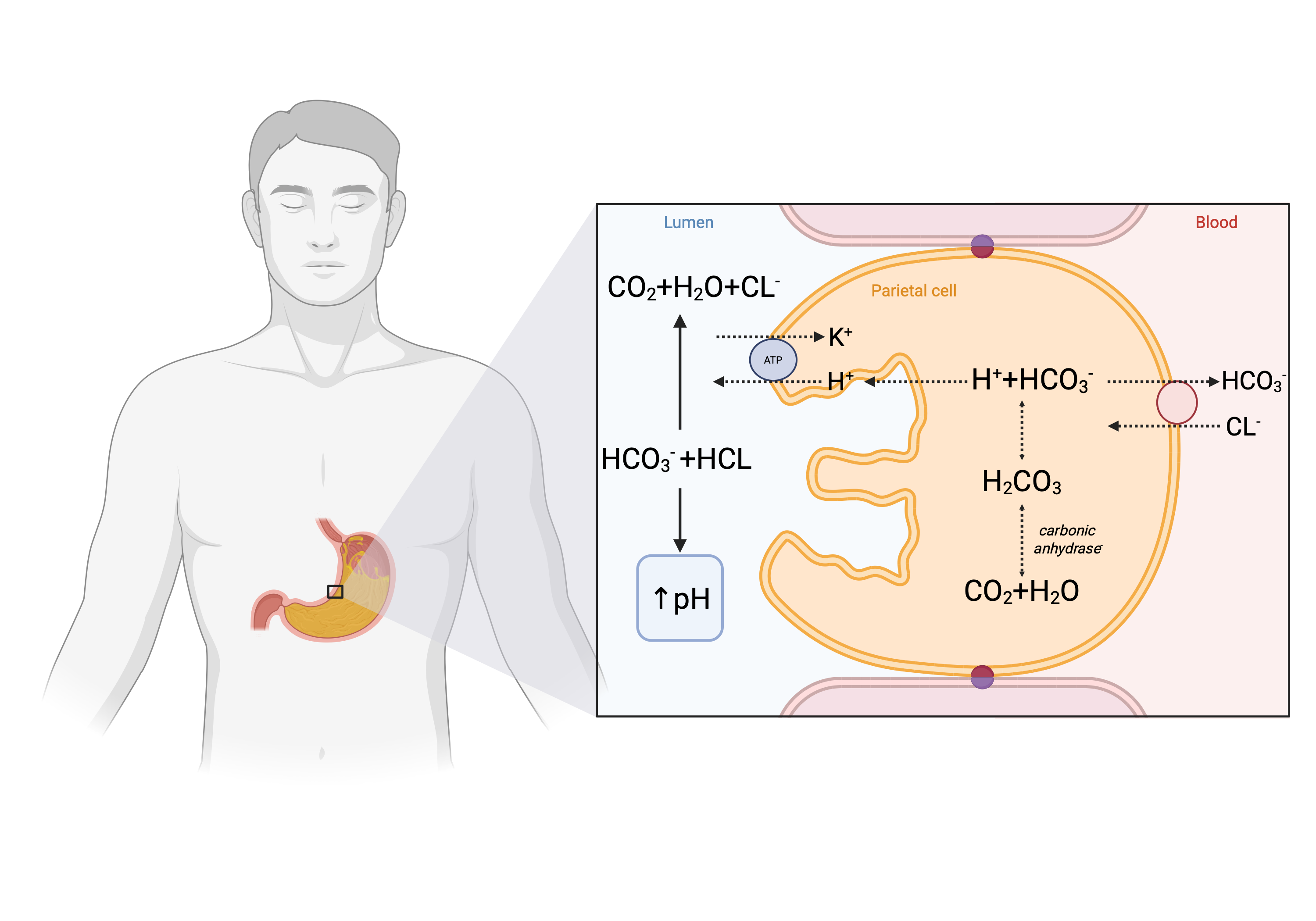
Bicarbonate can also be absorbed later in the small intestine, particularly in the jejunum. This is likely because the amount of sodium bicarbonate typically ingested during supplementation may exceed the amount of acid available in the stomach. As a result, not all of the bicarbonate reacts in the stomach, and some reaches the intestine, where it can be absorbed [1].
Together, these mechanisms help explain why blood bicarbonate levels can rise relatively quickly after sodium bicarbonate ingestion.
Mechanisms for the ergogenic effect of sodium bicarbonate
The ergogenic mechanisms of sodium bicarbonate are not yet fully understood. However, an increase in extracellular buffering capacity is widely accepted as one of the main mechanisms responsible for its ergogenic effects.
In my article on training zones, I discussed the maximal metabolic steady state (MMSS), also referred to as the second threshold. At this intensity, lactate levels are elevated but remain relatively stable. However, when exercise intensity exceeds the MMSS, the athlete enters zone 3, where both oxygen consumption and lactate production can approach their maximal levels.
The focus here is specifically on lactate because, although lactate itself is not the main problem, lactate transport is stoichiometrically coupled with hydrogen ions (H⁺). The accumulation of hydrogen ions is one factor that contributes to fatigue. Although scientists continue to debate the exact causes of exercise-induced fatigue, muscle acidity is considered an important contributing factor.
When H⁺ accumulates, muscle pH decreases, meaning the muscle environment becomes more acidic. This can reduce performance by slowing key enzymes involved in glycolysis, lowering calcium sensitivity, and interfering with the muscle contraction process. Intense exercise also changes the concentrations of important ions such as potassium, sodium, chloride, calcium, magnesium, and phosphate. These changes can reduce the muscle’s ability to transmit signals and contract effectively, thereby contributing to fatigue.
Sodium bicarbonate may help because it increases the body’s ability to buffer, or regulate, acidity outside the muscle cells [4]. After sodium bicarbonate ingestion, blood bicarbonate concentration increases. This raises blood pH and creates a more alkaline extracellular environment.
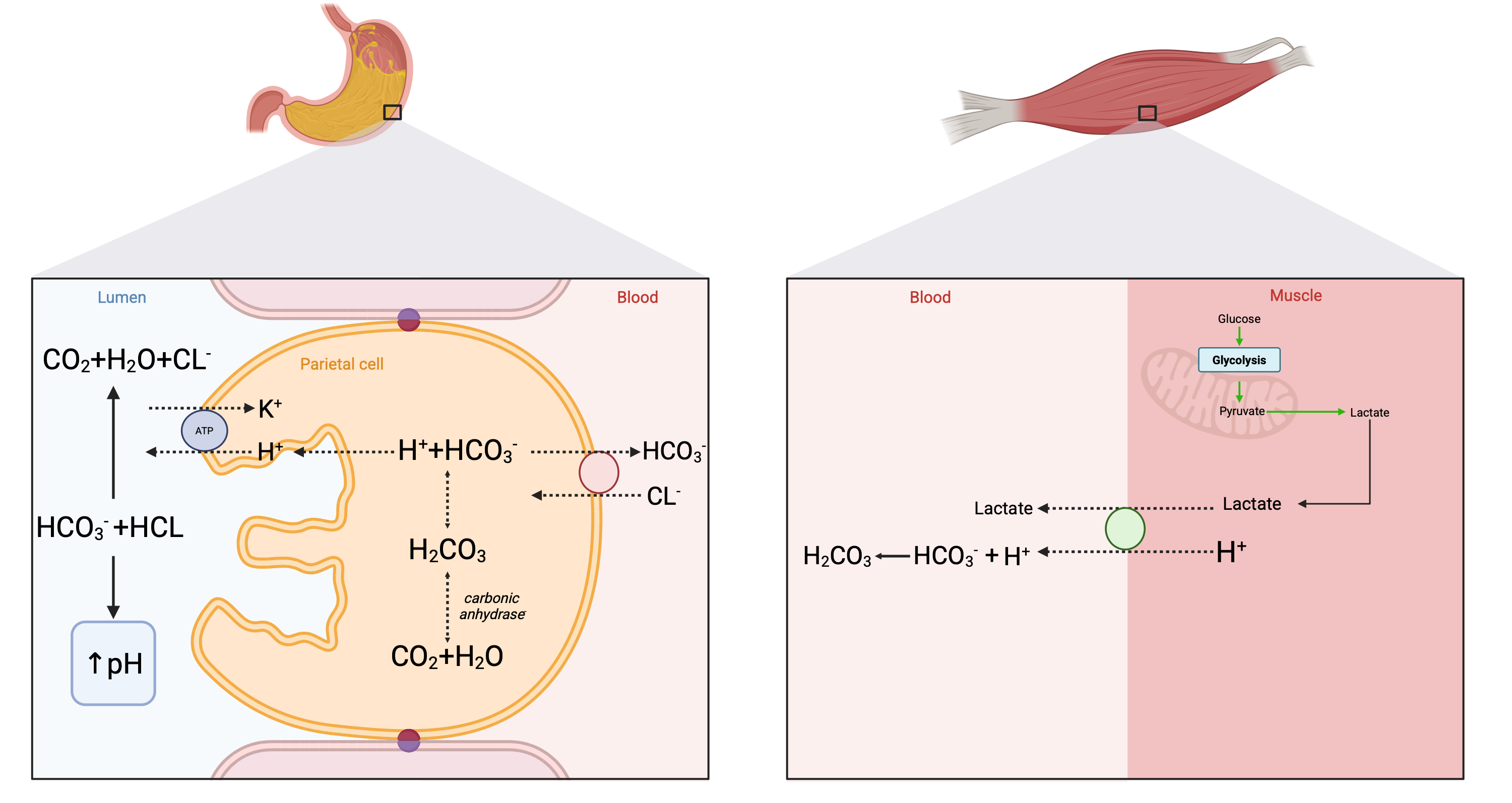
This higher blood pH increases the difference between the inside of the muscle cell, the intracellular environment, and the outside of the muscle cell, the extracellular environment. As a result, H⁺ can move out of the muscle more easily. This may help reduce acid accumulation inside the muscle and delay fatigue. Research has also shown that sodium bicarbonate can delay the development of muscle acidity during exercise. This supports the idea that sodium bicarbonate improves performance mainly by enhancing H⁺ removal from the muscle and improving acid-base balance.
Better control of muscle pH may also allow glycolysis to continue at a higher rate. This means the muscles can continue producing ATP, the main energy source for exercise, for longer. Studies have shown that after sodium bicarbonate intake, muscles may produce more lactate, use more glycogen, and show greater glycolytic activity. These effects may help athletes sustain high-intensity performance for a longer period. [3]
Sodium bicarbonate may also support muscle contraction more directly. By reducing acidity, it may lessen the negative effects of H⁺ accumulation on the muscle’s contractile proteins. It may also improve calcium sensitivity, which could help muscles produce more force. However, more research is needed to confirm these effects in human muscle.
Another way sodium bicarbonate may help is by reducing disturbances in ion balance during intense exercise. Exercise causes potassium to leave muscle cells, which can reduce muscle excitability and contribute to fatigue. Sodium bicarbonate may help regulate potassium levels and improve the activity of the sodium-potassium pump, which helps restore ion balance.
Overall, sodium bicarbonate may improve high-intensity exercise performance by helping the body manage acidity, increasing the removal of H⁺ from muscles, supporting ATP production through glycolysis, and helping maintain muscle excitability and force production.
Sodium Bicarbonate and Endurance Performance
If we consider the mechanism of action of sodium bicarbonate, the greatest improvements in endurance performance are most likely to occur during high-intensity exercise, especially when athletes are working above the maximal metabolic steady state (MMSS). In practical terms, this means sodium bicarbonate is most relevant for Zone 3 efforts, particularly in exercise lasting roughly 2–20 minutes, although some benefits may also appear in longer events that include high-intensity surges or a hard final phase.
To understand where sodium bicarbonate is most effective, we will look at the research across three categories:
- Short-duration efforts (10 seconds-5 min)
- Medium-duration efforts (5-60 min)
- Long-duration efforts (60+ min)
After that, we will examine whether sodium bicarbonate may also enhance training adaptations.
Short-Duration Efforts
McNaughton et al. [5] examined the effects of sodium bicarbonate supplementation at a dose of 0.3 g/kg body mass on cycling tasks lasting 10, 30, 120, and 240 seconds. The results showed that sodium bicarbonate had no ergogenic benefit for 10- or 30-second efforts, even though blood bicarbonate levels were significantly increased after ingestion.
However, for the longer work periods of 120 and 240 seconds, performance improved significantly compared with both the control and placebo conditions. This suggests that sodium bicarbonate is unlikely to be useful for very short maximal efforts, but may become beneficial once the effort is long enough for acidosis to become a meaningful limiting factor.
Running-based studies have focused on distances ranging from 400 m to 1500 m, with performance durations between approximately 57 and 254 seconds.
Bird et al. [6] examined the effects of sodium bicarbonate on 1500 m running performance. Twelve athletes, with an average 1500 m time of 247.7 ± 12.5 seconds, were divided into three groups:
- Group 1: Sodium bicarbonate, 0.3 g/kg body mass
- Group 2: Placebo
- Group 3: Control
The results showed that sodium bicarbonate improved performance by 1.1% compared with placebo and by 1.6% compared with the control condition. Although these may appear to be small differences, improvements of this size can be meaningful in competitive running events.
Medium-Duration Efforts
A good example of sodium bicarbonate supplementation in medium-duration endurance exercise comes from Gough et al. [7]. This study is particularly interesting because it did not only examine sodium bicarbonate in general; it specifically used the Maurten bicarbonate system, which is designed to reduce gastrointestinal discomfort.
The study included ten well-trained male cyclists with an average VO₂max of 67 ± 4 ml/kg/min. It was a randomised, crossover, placebo-controlled, double-blind trial.
The trails composition:
- Three experimental trials, each consisting of 2 × 4 km time trials separated by 45 minutes of passive recovery
The three conditions were:
- M-SB: 0.3 g/kg body mass Maurten sodium bicarbonate in hydrogel
- Placebo: 0.21 g/kg sodium chloride in vegetarian capsules, plus the same approximately 40 g hydrogel for blinding
- Control: No supplement and no hydrogel
A key strength of this study was that supplementation was timed to each individual’s time-to-peak blood bicarbonate, rather than using a fixed ingestion time. This individualised timing ranged from 90 to 240 minutes and is important because the literature suggests that performance benefits are more likely when exercise begins near peak blood bicarbonate concentration.
Maurten sodium bicarbonate was significantly faster than both the placebo and control conditions in both time trials:
- TT1: M-SB was 5.1 seconds faster than control and 3.5 seconds faster than placebo
- TT2: M-SB was 4.4 seconds faster than control and 4.1 seconds faster than placebo
Blood bicarbonate and pH were strongly elevated with Maurten sodium bicarbonate. After each time trial, bicarbonate dropped sharply, but it recovered faster in the sodium bicarbonate condition. By the end of the 45-minute recovery period, participants in the sodium bicarbonate condition had returned to approximately their pre-exercise bicarbonate levels, while the control and placebo conditions remained lower.
Another important study by Leach et al. [8] examined sodium bicarbonate during a 16.1 km cycling time trial. This was a double-blind, randomised crossover study, meaning every cyclist completed every condition and therefore served as his own control.
Two forms of sodium bicarbonate were compared, both at a dose of 0.3 g/kg body mass:
- SB-G: Standard gelatine capsules, which dissolve in the stomach
- SB-E: Enteric-coated capsules, designed to pass through the stomach and release in the gut
- Placebo: Corn flour in gelatine capsules
Rather than dosing everyone at a fixed time before exercise, the researchers first measured each rider’s individual peak blood bicarbonate timing. Each time trial then started exactly at that individual peak. This was the first study to use individualised peak-alkalosis timing for exercise lasting longer than 15 minutes. The placebo trial started at a standard 90 minutes post-ingestion.
The two sodium bicarbonate forms peaked at different times. The enteric-coated capsules peaked later and produced a lower peak bicarbonate response than the gelatine capsules.
Results:
Both sodium bicarbonate conditions significantly improved performance compared with placebo:
- SB-G: Approximately 34.4 seconds faster than placebo, equal to a 2.1% improvement
- SB-E: Approximately 40.4 seconds faster than placebo, equal to a 2.5% improvement
- Best individual sodium bicarbonate trial: 3.5% faster than placebo
These are meaningful improvements in a competitive endurance setting.
Gastrointestinal symptoms also differed between conditions. The placebo condition produced no gastrointestinal symptoms in any participant. However, the enteric-coated sodium bicarbonate capsules produced far fewer and milder gastrointestinal symptoms than the standard gelatine capsules. This suggests that capsule type and delivery method may play an important role in both tolerability and practical use.
Overall, these studies show that sodium bicarbonate can be effective in efforts lasting up to approximately 25–30 minutes. However, there is another important point: sodium bicarbonate may also have a delayed performance effect.
Egger et al. [9] investigated this by using a constant-load cycling test. Participants first completed 30 minutes at 95% of the first threshold, followed by exercise at 110% of MMSS until exhaustion. The outcome was an improvement of roughly 10%. Time to exhaustion increased from 45.0 minutes to 49.5 minutes, which equals an improvement of approximately 4.5 minutes.
This is interesting because the high-intensity Zone 3 portion of the test still lasted around 20 minutes, but it occurred after 30 minutes of prior exercise. This suggests that even when an event does not begin in Zone 3, sodium bicarbonate may still be beneficial if the athlete needs to access Zone 3 later in the race, such as during a climb, attack, surge, or final push.
However, the picture is not completely clear. A running study using a similar protocol did not find an improvement in the sodium bicarbonate group [10]. Therefore, more research is needed to understand exactly when and why delayed sodium bicarbonate effects occur, and whether they are more consistent in cycling than in running.
Long-Duration Efforts
When we consider exercise lasting longer than 60 minutes, the evidence becomes more mixed.
Northgraves et al. [11] investigated whether sodium bicarbonate could improve 40 km cycling time-trial performance, which lasted approximately 67 minutes. The study found that sodium bicarbonate did not improve 40 km time-trial performance for most recreationally active athletes, even though it successfully increased blood pH and bicarbonate.
However, McNaughton et al. [12] found that sodium bicarbonate ingestion increased mean power during a one-hour cycling exercise. The results were impressive: the sodium bicarbonate trial produced significantly more work than both the control and placebo trials. The improvement was approximately 14% more work compared with control and placebo.
This is a very large improvement, and it raises an important question: which study should we trust?
The best explanation is not that one study is right and the other is wrong. Instead, the more likely answer is that sodium bicarbonate can help some 60-minute cycling performances, but only when the event contains enough high-intensity, acidosis-limited work, and when the athlete is able to translate improved buffering into higher power output.
McNaughton created conditions where this was more likely to happen: trained cyclists, open competition, continuous feedback, maximal work for a fixed duration, and a performance culture familiar with time trials. Under these conditions, sodium bicarbonate may have allowed cyclists to sustain a higher power output.
Northgraves, on the other hand, showed an important boundary condition. Even when sodium bicarbonate clearly increases pH and bicarbonate, it does not necessarily improve a solo 40 km time trial. If pacing, cycling specificity, aerobic capacity, muscular endurance, or motivation are the dominant limiting factors, then extra buffering may not meaningfully improve performance.
The deeper interpretation is this: McNaughton may have found a large improvement because the protocol allowed acid-base buffering, motivation, and competitive pacing to interact in a way that increased total work output. Northgraves found no improvement because sodium bicarbonate produced alkalosis, but did not change the actual limiting factor in a controlled, solo, fixed-distance time trial.
A more recent study provided sodium bicarbonate at a dose of 0.3 g/kg before and during a three-hour simulated cycling race, which ended with a 90-second all-out sprint. Sodium bicarbonate ingestion enhanced mean power in the final sprint by approximately 3% [13].
This is practically important. It suggests that even in long-duration endurance events, sodium bicarbonate may still be useful when the decisive moment of the race is a short, very high-intensity effort performed under fatigue.
Effects of Sodium Bicarbonate on Training Adaptations
Sodium bicarbonate may not only improve acute performance; it may also enhance training adaptations when used during specific high-intensity training sessions.
Edge et al. [14] used a volume- and intensity-equated cycling interval training program in female student participants. Sixteen participants were randomised to consume either 0.4 g/kg sodium bicarbonate or the same amount of placebo one hour before every training session for eight weeks, for a total of 24 sessions.
After eight weeks, the sodium bicarbonate group showed greater improvements in lactate threshold and time to fatigue while cycling at 100% of peak oxygen uptake. Lactate threshold improved by 26% in the sodium bicarbonate group compared with 15% in the placebo group. Time to fatigue improved by 164% compared with 123% in the placebo group.
Another study in male student participants found that supplementation with bicarbonate at 0.2 g/kg body mass before high-intensity interval training led to greater improvements in relative peak power during 30-second all-out cycling compared with placebo. The bicarbonate group improved by 21%, while the placebo group improved by 10%.
However, in my opinion, these studies do not necessarily represent what is possible in well-trained athletes. The participants were not highly trained, and the training programs may not reflect the type of structured, progressive training used by competitive endurance athletes.
There is currently only one study that examined well-trained rowers. This study found that four weeks of sodium bicarbonate supplementation did not improve 2000 m time-trial performance [16]. However, this result is also difficult to interpret. Rowers may respond differently to sodium bicarbonate because they already have a high tolerance for lactate and hydrogen ion accumulation. It is not uncommon to see elite rowers reach peak lactate values around 22 mmol/L, which may be related to their high proportion of type IIa muscle fibres and their strong ability to tolerate severe metabolic stress.
However, there is one particularly interesting paper worth discussing because of its potential theoretical implications.
Percival et al. [27] investigated whether sodium bicarbonate ingestion before high-intensity interval training alters acute molecular responses in human skeletal muscle. The study specifically examined signalling pathways related to mitochondrial biogenesis, which is the process by which cells increase mitochondrial content and improve oxidative capacity.
The researchers found no greater activation of AMPK or p38 MAPK with sodium bicarbonate supplementation. However, they did observe a 28% greater acute increase in PGC-1α mRNA expression. This is potentially important because repeated increases in PGC-1α expression after training sessions could, in theory, contribute to greater mitochondrial adaptations over time.
However, this remains speculative. More research is needed to determine whether these acute molecular changes actually translate into meaningful long-term improvements in endurance performance or training adaptation.
Practical Conclusion
My conclusion is that sodium bicarbonate can improve performance during all-out, high-intensity efforts, and therefore it may make sense to use it during selected training sessions.
The reasoning is simple: if sodium bicarbonate allows an athlete to produce more work, sustain a higher power output, or complete more high-quality intervals, then the training stimulus may be greater. A greater training stimulus can potentially lead to greater adaptation.
However, this only makes sense for very demanding sessions, such as hard threshold work, VO₂max intervals. There is no practical reason to use sodium bicarbonate before easy endurance training.
For most athletes, sodium bicarbonate supplementation should be reserved for key high-intensity sessions and should probably not be used more than twice per week.
Protocols of sodium bicarbonate supplementation
Sodium bicarbonate dose
Based on the current evidence, a dose of 0.1 g/kg does not appear to improve exercise performance.
Several studies have found that 0.2 g/kg can improve performance, with some research showing effects similar to higher doses.
However, the most extensively studied dose is 0.3 g/kg. This dose has consistently produced performance benefits and is generally considered the optimal dose of sodium bicarbonate.
Higher doses, such as 0.4 g/kg and 0.5 g/kg, can also improve performance, but they do not appear to be necessary for achieving ergogenic effects. In addition, these higher doses are associated with a greater risk and severity of side effects, particularly gastrointestinal discomfort.
McNaughton et al. [17] looked at how different amounts of sodium bicarbonate affected performance during 60 seconds of intense cycling. Participants took doses ranging from 0.1 to 0.5 g per kg of body weight. The study found that total work improved with doses between 0.2 and 0.5 g/kg. Peak power improved only with higher doses, from 0.3 to 0.5 g/kg. There was no major performance difference between 0.3, 0.4, and 0.5 g/kg. However, the higher doses caused more side effects. Because of this, the study concluded that 0.3 g/kg gives the best balance between benefits and side effects.
Additionally Ferreira et al. [18] compared the effects of taking 0.1 g/kg and 0.3 g/kg of sodium bicarbonate on cycling performance until exhaustion. The results showed that only the 0.3 g/kg dose improved performance. With this dose, participants cycled for about 76 seconds before becoming fatigued. The 0.1 g/kg dose did not improve performance, and the results were almost the same as the placebo condition, about 65 seconds compared with 68 seconds.
Timing of Sodium Bicarbonate Supplementation
The timing of sodium bicarbonate supplementation is highly individual and also depends on the product or delivery method being used. In practice, athletes most commonly supplement sodium bicarbonate in one of two forms: gelatin capsules or the Maurten Bicarb System.
Gelatin Capsules
General recommendations often suggest taking sodium bicarbonate approximately 60 minutes before training or competition. However, research shows that this timing may not be optimal for everyone.
Stannard et al. [19] investigated the time to peak plasma bicarbonate concentration and found large differences between individuals. This means that one athlete may reach peak bicarbonate levels much earlier or later than another, even when taking the same dose.
Oliveira et al. [20] examined three repeated sodium bicarbonate administrations using gelatin capsules and reported that the time to peak plasma bicarbonate concentration was inconsistent and not reliably reproducible. In other words, even the same athlete may not always peak at exactly the same time after ingestion.
Based on the current evidence, athletes using 0.3 g/kg sodium bicarbonate in gelatin capsules should ideally complete supplementation around 2 to 2.5 hours before the main high-intensity exercise bout. A practical timing range is 90 to 180 minutes before exercise, while a broader range of 90 to 225 minutes appears to maintain a high probability of exceeding the proposed ergogenic bicarbonate thresholds of 5–6 mmol/L.
Maurten Bicarb System
The Maurten Bicarb System appears to have a more specific timing profile. A study by Gough et al. [21] found that blood bicarbonate peaked 117.3 ± 36.6 minutes after ingestion.
Based on this, a practical recommendation is to take the Maurten Bicarb System approximately 2 hours before the start of the key high-intensity exercise bout. However, athletes should still test this timing in training before using it in competition, as individual responses and gastrointestinal tolerance can vary.
Multiple-Day Protocols of Sodium Bicarbonate Supplementation
Multiple-day sodium bicarbonate supplementation protocols can be effective, but it is still not completely clear how their effects compare with those seen after a single acute dose.
One important study by Driller et al. compared acute and chronic sodium bicarbonate supplementation in well-trained cyclists during a 4-minute all-out effort.
The results showed that both protocols produced an ergogenic effect, but there was no statistically significant difference between them. This suggests that multiple-day protocols may be useful, but they may not necessarily be superior to a well-timed single-dose strategy.
Another important point is that the daily dose may need to be adjusted when using a multiple-day protocol. Douroudos et al. [25] evaluated Wingate test performance after five days of supplementation with either 0.3 g/kg or 0.5 g/kg per day of sodium bicarbonate. The group taking 0.5 g/kg showed a 64% greater improvement than the 0.3 g/kg group. Although the 0.3 g/kg group also improved, the change was not statistically significant.
Therefore, for protocols lasting between three and seven days, a daily dose of 0.4–0.5 g/kg may be needed to produce a meaningful ergogenic effect. To improve tolerability, the total daily dose can be split into two equal servings across the day.
Side Effects of Sodium Bicarbonate Supplementation
When using sodium bicarbonate, it is important to consider the potential side effects. The most relevant issue is gastrointestinal discomfort, which can include:
- Stomach cramps
- Stomach pain
- Bloating
- Belching
- Diarrhoea
- Vomiting
This matters because gastrointestinal discomfort can reduce or even cancel out the potential performance benefit of sodium bicarbonate. Saunders et al. showed this clearly: sodium bicarbonate did not significantly improve performance when all 21 participants were analysed together, but it did improve cycling capacity once the participants who experienced gastrointestinal distress were removed from the analysis.
In other words, sodium bicarbonate may be effective, but only if the athlete can tolerate it well.
One practical strategy to reduce side effects comes from Carr et al. [25], who found that combining sodium bicarbonate at 0.3 g/kg with a high-carbohydrate meal of 1.5 g/kg body mass resulted in the lowest incidence of gastrointestinal symptoms. However, this research focused on sodium bicarbonate delivered in gelatin capsules.
Another option is to use a different delivery system. Gough et al. [21] compared commercially available sodium bicarbonate capsules with the Maurten Bicarb System. This product uses a carbohydrate hydrogel to deliver sodium bicarbonate mini-tablets that are small enough to pass through the pyloric sphincter. The aim is to reduce disruption in the stomach and improve gastrointestinal tolerance.
The results showed that the Maurten Bicarb System produced a faster and slightly greater bicarbonate response, extended the likely ergogenic window, and dramatically reduced gastrointestinal symptoms compared with capsules [21].
Introduction
Sodium bicarbonate is the scientific name for baking soda.
The chemical formula for sodium bicarbonate is: NaHCO₃
It is made of:
- Na = sodium
- H = hydrogen
- C = carbon
- O₃ = three oxygen atoms
Sodium bicarbonate is used as an ergogenic aid to improve endurance. According to the AIS it is classified as a Group A ergogenic aid, due to strong scientific evidence for use in endurance sport using evidence-based protocols.
Mechanisms for bicarbonate absorption
Sodium bicarbonate dissolves readily in water. When it comes into contact with fluids, including gastric acid, it rapidly dissociates into sodium ions (Na⁺) and bicarbonate ions (HCO₃⁻). The main reactions can be summarised as follows [2]:
NaHCO₃ → Na⁺ + HCO₃⁻
HCl + Na⁺ + HCO₃⁻ → Na⁺ + Cl⁻ + H₂CO₃
H₂CO₃ → CO₂ + H₂O
In the stomach, some of the bicarbonate reacts with gastric acid to form carbonic acid (H₂CO₃), which then breaks down into carbon dioxide (CO₂) and water. Because CO₂ is a gas, it can leave the stomach contents and be expelled from the body. This helps explain common gastrointestinal side effects of sodium bicarbonate supplementation, such as belching and bloating. Higher doses of sodium bicarbonate produce more CO₂, which may increase the likelihood or severity of these symptoms.
Although some bicarbonate is consumed during the neutralisation of gastric acid, sodium bicarbonate can still increase bicarbonate levels in the blood. One contributing mechanism is the response of parietal cells to changes in gastric pH. As gastric acidity is reduced, parietal cells secrete hydrogen ions (H⁺) into the stomach lumen via the H⁺/K⁺-ATPase pump to help restore gastric acidity. This process is coupled with the basolateral Cl⁻/HCO₃⁻ exchanger, which transports bicarbonate into the extracellular fluid.
Bicarbonate can also be absorbed later in the small intestine, particularly in the jejunum. This is likely because the amount of sodium bicarbonate typically ingested during supplementation may exceed the amount of acid available in the stomach. As a result, not all of the bicarbonate reacts in the stomach, and some reaches the intestine, where it can be absorbed [1].
Together, these mechanisms help explain why blood bicarbonate levels can rise relatively quickly after sodium bicarbonate ingestion.
Mechanisms for the ergogenic effect of sodium bicarbonate
The ergogenic mechanisms of sodium bicarbonate are not yet fully understood. However, an increase in extracellular buffering capacity is widely accepted as one of the main mechanisms responsible for its ergogenic effects.
In my article on training zones, I discussed the maximal metabolic steady state (MMSS), also referred to as the second threshold. At this intensity, lactate levels are elevated but remain relatively stable. However, when exercise intensity exceeds the MMSS, the athlete enters zone 3, where both oxygen consumption and lactate production can approach their maximal levels.
The focus here is specifically on lactate because, although lactate itself is not the main problem, lactate transport is stoichiometrically coupled with hydrogen ions (H⁺). The accumulation of hydrogen ions is one factor that contributes to fatigue. Although scientists continue to debate the exact causes of exercise-induced fatigue, muscle acidity is considered an important contributing factor.
When H⁺ accumulates, muscle pH decreases, meaning the muscle environment becomes more acidic. This can reduce performance by slowing key enzymes involved in glycolysis, lowering calcium sensitivity, and interfering with the muscle contraction process. Intense exercise also changes the concentrations of important ions such as potassium, sodium, chloride, calcium, magnesium, and phosphate. These changes can reduce the muscle’s ability to transmit signals and contract effectively, thereby contributing to fatigue.
Sodium bicarbonate may help because it increases the body’s ability to buffer, or regulate, acidity outside the muscle cells [4]. After sodium bicarbonate ingestion, blood bicarbonate concentration increases. This raises blood pH and creates a more alkaline extracellular environment.
This higher blood pH increases the difference between the inside of the muscle cell, the intracellular environment, and the outside of the muscle cell, the extracellular environment. As a result, H⁺ can move out of the muscle more easily. This may help reduce acid accumulation inside the muscle and delay fatigue. Research has also shown that sodium bicarbonate can delay the development of muscle acidity during exercise. This supports the idea that sodium bicarbonate improves performance mainly by enhancing H⁺ removal from the muscle and improving acid-base balance.
Better control of muscle pH may also allow glycolysis to continue at a higher rate. This means the muscles can continue producing ATP, the main energy source for exercise, for longer. Studies have shown that after sodium bicarbonate intake, muscles may produce more lactate, use more glycogen, and show greater glycolytic activity. These effects may help athletes sustain high-intensity performance for a longer period. [3]
Sodium bicarbonate may also support muscle contraction more directly. By reducing acidity, it may lessen the negative effects of H⁺ accumulation on the muscle’s contractile proteins. It may also improve calcium sensitivity, which could help muscles produce more force. However, more research is needed to confirm these effects in human muscle.
Another way sodium bicarbonate may help is by reducing disturbances in ion balance during intense exercise. Exercise causes potassium to leave muscle cells, which can reduce muscle excitability and contribute to fatigue. Sodium bicarbonate may help regulate potassium levels and improve the activity of the sodium-potassium pump, which helps restore ion balance.
Overall, sodium bicarbonate may improve high-intensity exercise performance by helping the body manage acidity, increasing the removal of H⁺ from muscles, supporting ATP production through glycolysis, and helping maintain muscle excitability and force production.
Sodium Bicarbonate and Endurance Performance
If we consider the mechanism of action of sodium bicarbonate, the greatest improvements in endurance performance are most likely to occur during high-intensity exercise, especially when athletes are working above the maximal metabolic steady state (MMSS). In practical terms, this means sodium bicarbonate is most relevant for Zone 3 efforts, particularly in exercise lasting roughly 2–20 minutes, although some benefits may also appear in longer events that include high-intensity surges or a hard final phase.
To understand where sodium bicarbonate is most effective, we will look at the research across three categories:
- Short-duration efforts (10 seconds-5 min)
- Medium-duration efforts (5-60 min)
- Long-duration efforts (60+ min)
After that, we will examine whether sodium bicarbonate may also enhance training adaptations.
Short-Duration Efforts
McNaughton et al. [5] examined the effects of sodium bicarbonate supplementation at a dose of 0.3 g/kg body mass on cycling tasks lasting 10, 30, 120, and 240 seconds. The results showed that sodium bicarbonate had no ergogenic benefit for 10- or 30-second efforts, even though blood bicarbonate levels were significantly increased after ingestion.
However, for the longer work periods of 120 and 240 seconds, performance improved significantly compared with both the control and placebo conditions. This suggests that sodium bicarbonate is unlikely to be useful for very short maximal efforts, but may become beneficial once the effort is long enough for acidosis to become a meaningful limiting factor.
Running-based studies have focused on distances ranging from 400 m to 1500 m, with performance durations between approximately 57 and 254 seconds.
Bird et al. [6] examined the effects of sodium bicarbonate on 1500 m running performance. Twelve athletes, with an average 1500 m time of 247.7 ± 12.5 seconds, were divided into three groups:
- Group 1: Sodium bicarbonate, 0.3 g/kg body mass
- Group 2: Placebo
- Group 3: Control
The results showed that sodium bicarbonate improved performance by 1.1% compared with placebo and by 1.6% compared with the control condition. Although these may appear to be small differences, improvements of this size can be meaningful in competitive running events.
Medium-Duration Efforts
A good example of sodium bicarbonate supplementation in medium-duration endurance exercise comes from Gough et al. [7]. This study is particularly interesting because it did not only examine sodium bicarbonate in general; it specifically used the Maurten bicarbonate system, which is designed to reduce gastrointestinal discomfort.
The study included ten well-trained male cyclists with an average VO₂max of 67 ± 4 ml/kg/min. It was a randomised, crossover, placebo-controlled, double-blind trial.
The trails composition:
- Three experimental trials, each consisting of 2 × 4 km time trials separated by 45 minutes of passive recovery
The three conditions were:
- M-SB: 0.3 g/kg body mass Maurten sodium bicarbonate in hydrogel
- Placebo: 0.21 g/kg sodium chloride in vegetarian capsules, plus the same approximately 40 g hydrogel for blinding
- Control: No supplement and no hydrogel
A key strength of this study was that supplementation was timed to each individual’s time-to-peak blood bicarbonate, rather than using a fixed ingestion time. This individualised timing ranged from 90 to 240 minutes and is important because the literature suggests that performance benefits are more likely when exercise begins near peak blood bicarbonate concentration.
Maurten sodium bicarbonate was significantly faster than both the placebo and control conditions in both time trials:
- TT1: M-SB was 5.1 seconds faster than control and 3.5 seconds faster than placebo
- TT2: M-SB was 4.4 seconds faster than control and 4.1 seconds faster than placebo
Blood bicarbonate and pH were strongly elevated with Maurten sodium bicarbonate. After each time trial, bicarbonate dropped sharply, but it recovered faster in the sodium bicarbonate condition. By the end of the 45-minute recovery period, participants in the sodium bicarbonate condition had returned to approximately their pre-exercise bicarbonate levels, while the control and placebo conditions remained lower.
Another important study by Leach et al. [8] examined sodium bicarbonate during a 16.1 km cycling time trial. This was a double-blind, randomised crossover study, meaning every cyclist completed every condition and therefore served as his own control.
Two forms of sodium bicarbonate were compared, both at a dose of 0.3 g/kg body mass:
- SB-G: Standard gelatine capsules, which dissolve in the stomach
- SB-E: Enteric-coated capsules, designed to pass through the stomach and release in the gut
- Placebo: Corn flour in gelatine capsules
Rather than dosing everyone at a fixed time before exercise, the researchers first measured each rider’s individual peak blood bicarbonate timing. Each time trial then started exactly at that individual peak. This was the first study to use individualised peak-alkalosis timing for exercise lasting longer than 15 minutes. The placebo trial started at a standard 90 minutes post-ingestion.
The two sodium bicarbonate forms peaked at different times. The enteric-coated capsules peaked later and produced a lower peak bicarbonate response than the gelatine capsules.
Results:
Both sodium bicarbonate conditions significantly improved performance compared with placebo:
- SB-G: Approximately 34.4 seconds faster than placebo, equal to a 2.1% improvement
- SB-E: Approximately 40.4 seconds faster than placebo, equal to a 2.5% improvement
- Best individual sodium bicarbonate trial: 3.5% faster than placebo
These are meaningful improvements in a competitive endurance setting.
Gastrointestinal symptoms also differed between conditions. The placebo condition produced no gastrointestinal symptoms in any participant. However, the enteric-coated sodium bicarbonate capsules produced far fewer and milder gastrointestinal symptoms than the standard gelatine capsules. This suggests that capsule type and delivery method may play an important role in both tolerability and practical use.
Overall, these studies show that sodium bicarbonate can be effective in efforts lasting up to approximately 25–30 minutes. However, there is another important point: sodium bicarbonate may also have a delayed performance effect.
Egger et al. [9] investigated this by using a constant-load cycling test. Participants first completed 30 minutes at 95% of the first threshold, followed by exercise at 110% of MMSS until exhaustion. The outcome was an improvement of roughly 10%. Time to exhaustion increased from 45.0 minutes to 49.5 minutes, which equals an improvement of approximately 4.5 minutes.
This is interesting because the high-intensity Zone 3 portion of the test still lasted around 20 minutes, but it occurred after 30 minutes of prior exercise. This suggests that even when an event does not begin in Zone 3, sodium bicarbonate may still be beneficial if the athlete needs to access Zone 3 later in the race, such as during a climb, attack, surge, or final push.
However, the picture is not completely clear. A running study using a similar protocol did not find an improvement in the sodium bicarbonate group [10]. Therefore, more research is needed to understand exactly when and why delayed sodium bicarbonate effects occur, and whether they are more consistent in cycling than in running.
Long-Duration Efforts
When we consider exercise lasting longer than 60 minutes, the evidence becomes more mixed.
Northgraves et al. [11] investigated whether sodium bicarbonate could improve 40 km cycling time-trial performance, which lasted approximately 67 minutes. The study found that sodium bicarbonate did not improve 40 km time-trial performance for most recreationally active athletes, even though it successfully increased blood pH and bicarbonate.
However, McNaughton et al. [12] found that sodium bicarbonate ingestion increased mean power during a one-hour cycling exercise. The results were impressive: the sodium bicarbonate trial produced significantly more work than both the control and placebo trials. The improvement was approximately 14% more work compared with control and placebo.
This is a very large improvement, and it raises an important question: which study should we trust?
The best explanation is not that one study is right and the other is wrong. Instead, the more likely answer is that sodium bicarbonate can help some 60-minute cycling performances, but only when the event contains enough high-intensity, acidosis-limited work, and when the athlete is able to translate improved buffering into higher power output.
McNaughton created conditions where this was more likely to happen: trained cyclists, open competition, continuous feedback, maximal work for a fixed duration, and a performance culture familiar with time trials. Under these conditions, sodium bicarbonate may have allowed cyclists to sustain a higher power output.
Northgraves, on the other hand, showed an important boundary condition. Even when sodium bicarbonate clearly increases pH and bicarbonate, it does not necessarily improve a solo 40 km time trial. If pacing, cycling specificity, aerobic capacity, muscular endurance, or motivation are the dominant limiting factors, then extra buffering may not meaningfully improve performance.
The deeper interpretation is this: McNaughton may have found a large improvement because the protocol allowed acid-base buffering, motivation, and competitive pacing to interact in a way that increased total work output. Northgraves found no improvement because sodium bicarbonate produced alkalosis, but did not change the actual limiting factor in a controlled, solo, fixed-distance time trial.
A more recent study provided sodium bicarbonate at a dose of 0.3 g/kg before and during a three-hour simulated cycling race, which ended with a 90-second all-out sprint. Sodium bicarbonate ingestion enhanced mean power in the final sprint by approximately 3% [13].
This is practically important. It suggests that even in long-duration endurance events, sodium bicarbonate may still be useful when the decisive moment of the race is a short, very high-intensity effort performed under fatigue.
Effects of Sodium Bicarbonate on Training Adaptations
Sodium bicarbonate may not only improve acute performance; it may also enhance training adaptations when used during specific high-intensity training sessions.
Edge et al. [14] used a volume- and intensity-equated cycling interval training program in female student participants. Sixteen participants were randomised to consume either 0.4 g/kg sodium bicarbonate or the same amount of placebo one hour before every training session for eight weeks, for a total of 24 sessions.
After eight weeks, the sodium bicarbonate group showed greater improvements in lactate threshold and time to fatigue while cycling at 100% of peak oxygen uptake. Lactate threshold improved by 26% in the sodium bicarbonate group compared with 15% in the placebo group. Time to fatigue improved by 164% compared with 123% in the placebo group.
Another study in male student participants found that supplementation with bicarbonate at 0.2 g/kg body mass before high-intensity interval training led to greater improvements in relative peak power during 30-second all-out cycling compared with placebo. The bicarbonate group improved by 21%, while the placebo group improved by 10%.
However, in my opinion, these studies do not necessarily represent what is possible in well-trained athletes. The participants were not highly trained, and the training programs may not reflect the type of structured, progressive training used by competitive endurance athletes.
There is currently only one study that examined well-trained rowers. This study found that four weeks of sodium bicarbonate supplementation did not improve 2000 m time-trial performance [16]. However, this result is also difficult to interpret. Rowers may respond differently to sodium bicarbonate because they already have a high tolerance for lactate and hydrogen ion accumulation. It is not uncommon to see elite rowers reach peak lactate values around 22 mmol/L, which may be related to their high proportion of type IIa muscle fibres and their strong ability to tolerate severe metabolic stress.
However, there is one particularly interesting paper worth discussing because of its potential theoretical implications.
Percival et al. [27] investigated whether sodium bicarbonate ingestion before high-intensity interval training alters acute molecular responses in human skeletal muscle. The study specifically examined signalling pathways related to mitochondrial biogenesis, which is the process by which cells increase mitochondrial content and improve oxidative capacity.
The researchers found no greater activation of AMPK or p38 MAPK with sodium bicarbonate supplementation. However, they did observe a 28% greater acute increase in PGC-1α mRNA expression. This is potentially important because repeated increases in PGC-1α expression after training sessions could, in theory, contribute to greater mitochondrial adaptations over time.
However, this remains speculative. More research is needed to determine whether these acute molecular changes actually translate into meaningful long-term improvements in endurance performance or training adaptation.
Practical Conclusion
My conclusion is that sodium bicarbonate can improve performance during all-out, high-intensity efforts, and therefore it may make sense to use it during selected training sessions.
The reasoning is simple: if sodium bicarbonate allows an athlete to produce more work, sustain a higher power output, or complete more high-quality intervals, then the training stimulus may be greater. A greater training stimulus can potentially lead to greater adaptation.
However, this only makes sense for very demanding sessions, such as hard threshold work, VO₂max intervals. There is no practical reason to use sodium bicarbonate before easy endurance training.
For most athletes, sodium bicarbonate supplementation should be reserved for key high-intensity sessions and should probably not be used more than twice per week.
Protocols of sodium bicarbonate supplementation
Sodium bicarbonate dose
Based on the current evidence, a dose of 0.1 g/kg does not appear to improve exercise performance.
Several studies have found that 0.2 g/kg can improve performance, with some research showing effects similar to higher doses.
However, the most extensively studied dose is 0.3 g/kg. This dose has consistently produced performance benefits and is generally considered the optimal dose of sodium bicarbonate.
Higher doses, such as 0.4 g/kg and 0.5 g/kg, can also improve performance, but they do not appear to be necessary for achieving ergogenic effects. In addition, these higher doses are associated with a greater risk and severity of side effects, particularly gastrointestinal discomfort.
McNaughton et al. [17] looked at how different amounts of sodium bicarbonate affected performance during 60 seconds of intense cycling. Participants took doses ranging from 0.1 to 0.5 g per kg of body weight. The study found that total work improved with doses between 0.2 and 0.5 g/kg. Peak power improved only with higher doses, from 0.3 to 0.5 g/kg. There was no major performance difference between 0.3, 0.4, and 0.5 g/kg. However, the higher doses caused more side effects. Because of this, the study concluded that 0.3 g/kg gives the best balance between benefits and side effects.
Additionally Ferreira et al. [18] compared the effects of taking 0.1 g/kg and 0.3 g/kg of sodium bicarbonate on cycling performance until exhaustion. The results showed that only the 0.3 g/kg dose improved performance. With this dose, participants cycled for about 76 seconds before becoming fatigued. The 0.1 g/kg dose did not improve performance, and the results were almost the same as the placebo condition, about 65 seconds compared with 68 seconds.
Timing of Sodium Bicarbonate Supplementation
The timing of sodium bicarbonate supplementation is highly individual and also depends on the product or delivery method being used. In practice, athletes most commonly supplement sodium bicarbonate in one of two forms: gelatin capsules or the Maurten Bicarb System.
Gelatin Capsules
General recommendations often suggest taking sodium bicarbonate approximately 60 minutes before training or competition. However, research shows that this timing may not be optimal for everyone.
Stannard et al. [19] investigated the time to peak plasma bicarbonate concentration and found large differences between individuals. This means that one athlete may reach peak bicarbonate levels much earlier or later than another, even when taking the same dose.
Oliveira et al. [20] examined three repeated sodium bicarbonate administrations using gelatin capsules and reported that the time to peak plasma bicarbonate concentration was inconsistent and not reliably reproducible. In other words, even the same athlete may not always peak at exactly the same time after ingestion.
Based on the current evidence, athletes using 0.3 g/kg sodium bicarbonate in gelatin capsules should ideally complete supplementation around 2 to 2.5 hours before the main high-intensity exercise bout. A practical timing range is 90 to 180 minutes before exercise, while a broader range of 90 to 225 minutes appears to maintain a high probability of exceeding the proposed ergogenic bicarbonate thresholds of 5–6 mmol/L.
Maurten Bicarb System
The Maurten Bicarb System appears to have a more specific timing profile. A study by Gough et al. [21] found that blood bicarbonate peaked 117.3 ± 36.6 minutes after ingestion.
Based on this, a practical recommendation is to take the Maurten Bicarb System approximately 2 hours before the start of the key high-intensity exercise bout. However, athletes should still test this timing in training before using it in competition, as individual responses and gastrointestinal tolerance can vary.
Multiple-Day Protocols of Sodium Bicarbonate Supplementation
Multiple-day sodium bicarbonate supplementation protocols can be effective, but it is still not completely clear how their effects compare with those seen after a single acute dose.
One important study by Driller et al. compared acute and chronic sodium bicarbonate supplementation in well-trained cyclists during a 4-minute all-out effort.
The results showed that both protocols produced an ergogenic effect, but there was no statistically significant difference between them. This suggests that multiple-day protocols may be useful, but they may not necessarily be superior to a well-timed single-dose strategy.
Another important point is that the daily dose may need to be adjusted when using a multiple-day protocol. Douroudos et al. [25] evaluated Wingate test performance after five days of supplementation with either 0.3 g/kg or 0.5 g/kg per day of sodium bicarbonate. The group taking 0.5 g/kg showed a 64% greater improvement than the 0.3 g/kg group. Although the 0.3 g/kg group also improved, the change was not statistically significant.
Therefore, for protocols lasting between three and seven days, a daily dose of 0.4–0.5 g/kg may be needed to produce a meaningful ergogenic effect. To improve tolerability, the total daily dose can be split into two equal servings across the day.
Side Effects of Sodium Bicarbonate Supplementation
When using sodium bicarbonate, it is important to consider the potential side effects. The most relevant issue is gastrointestinal discomfort, which can include:
- Stomach cramps
- Stomach pain
- Bloating
- Belching
- Diarrhoea
- Vomiting
This matters because gastrointestinal discomfort can reduce or even cancel out the potential performance benefit of sodium bicarbonate. Saunders et al. showed this clearly: sodium bicarbonate did not significantly improve performance when all 21 participants were analysed together, but it did improve cycling capacity once the participants who experienced gastrointestinal distress were removed from the analysis.
In other words, sodium bicarbonate may be effective, but only if the athlete can tolerate it well.
One practical strategy to reduce side effects comes from Carr et al. [25], who found that combining sodium bicarbonate at 0.3 g/kg with a high-carbohydrate meal of 1.5 g/kg body mass resulted in the lowest incidence of gastrointestinal symptoms. However, this research focused on sodium bicarbonate delivered in gelatin capsules.
Another option is to use a different delivery system. Gough et al. [21] compared commercially available sodium bicarbonate capsules with the Maurten Bicarb System. This product uses a carbohydrate hydrogel to deliver sodium bicarbonate mini-tablets that are small enough to pass through the pyloric sphincter. The aim is to reduce disruption in the stomach and improve gastrointestinal tolerance.
The results showed that the Maurten Bicarb System produced a faster and slightly greater bicarbonate response, extended the likely ergogenic window, and dramatically reduced gastrointestinal symptoms compared with capsules [21].
Explore The Library
Get access to comprehensive content on performance, nutrition, and health — including current articles, training guides and practical protocols.