Sleep - Foundational Principles
Let's start by answering the question of what sleep actually is. Sleep is a physiologically recurring state of rest characterised by altered consciousness and inactivity of voluntary muscles.
When it comes to the architecture of sleep, there are three distinct terms you need to know:
- Sleep cycle
- Sleep phase
- Sleep stage
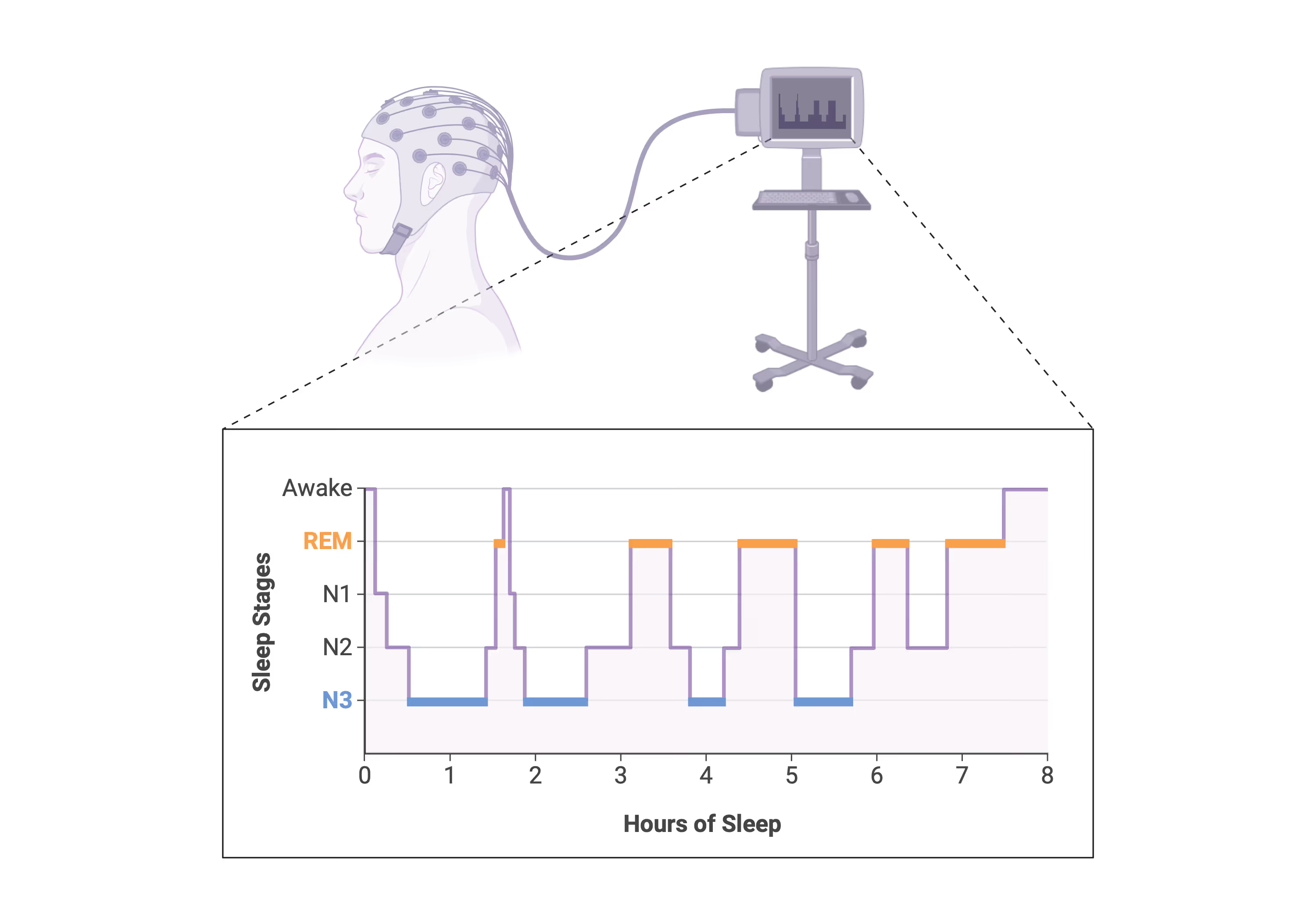
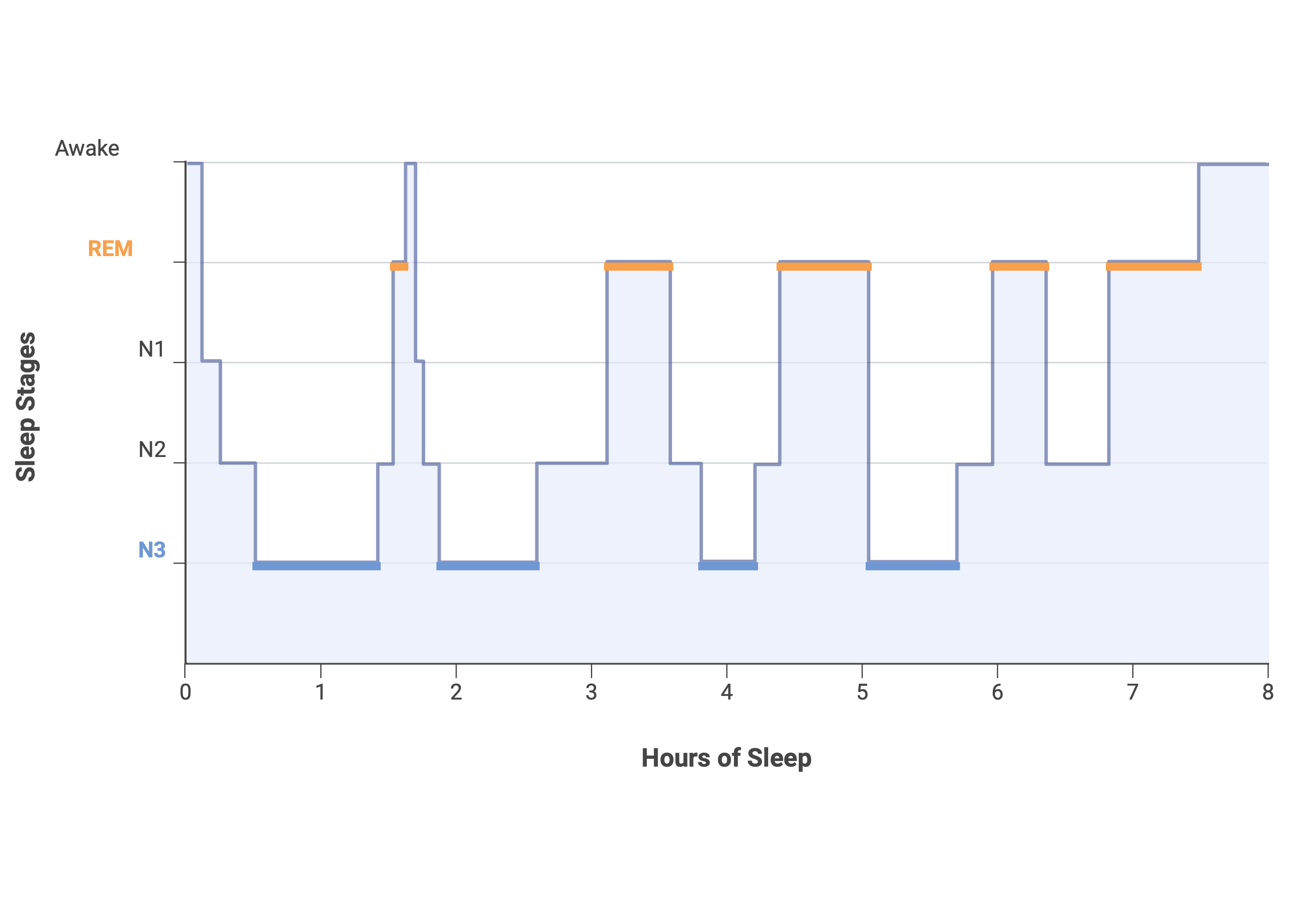
Sleep occurs in repeating cycles. A proper night's sleep typically consists of 4–5 sleep cycles of 90–120 minutes each. Within each cycle there are two phases: a non-REM (NREM) phase and a REM phase. Sleep stages are distinct periods within those phases, defined by specific EEG patterns and physiological changes. NREM sleep is divided into three substages (N1, N2, N3), while REM sleep functions as both a phase and a stage2..
One additional term is worth knowing: sleep latency - the time it takes to fall asleep once you are in bed with the lights out. It is measured in minutes, with 3–20 minutes considered normal.
Brain Waves and the EEG
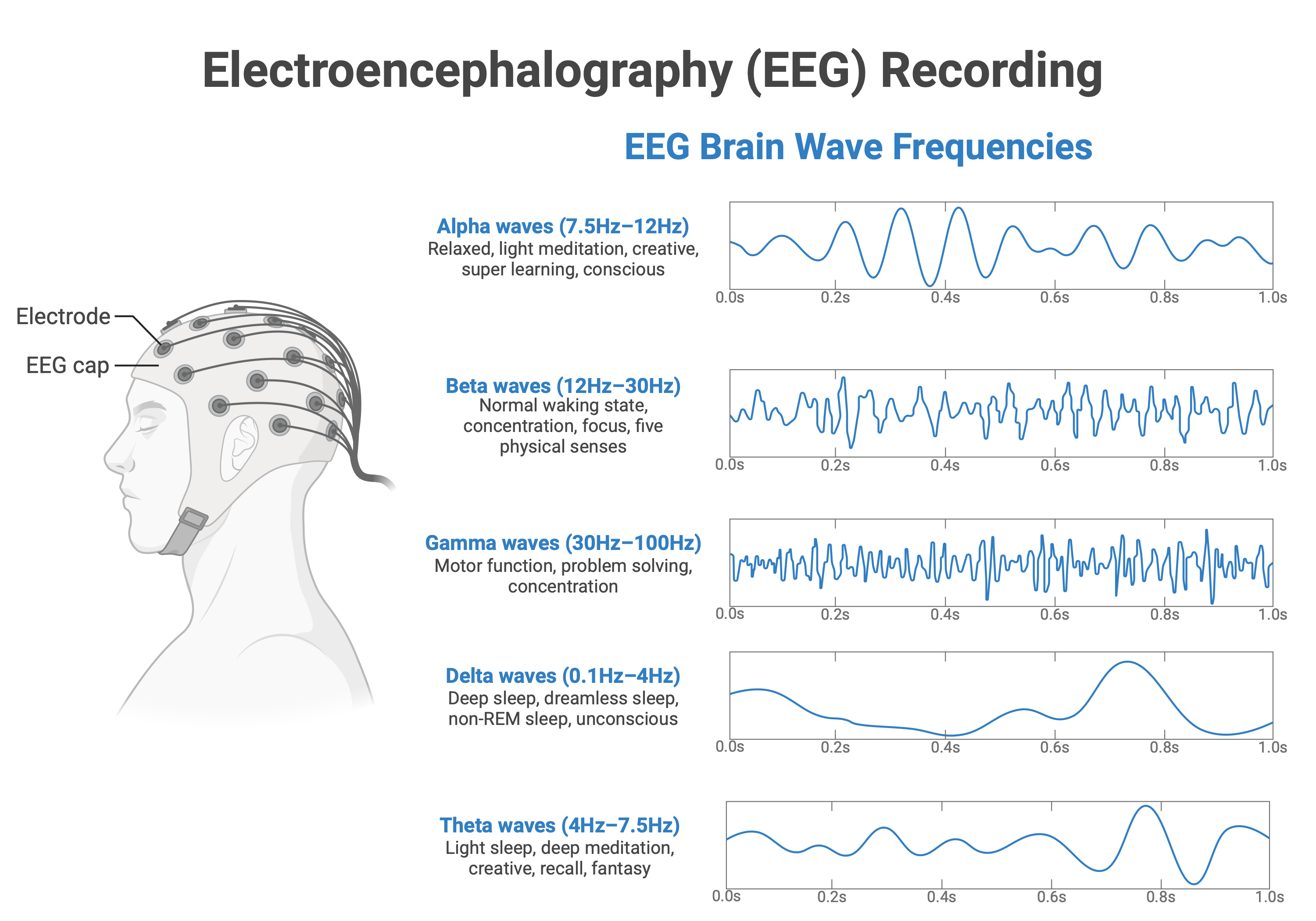
An EEG (electroencephalogram) is a recording of the fluctuations in electrical activity at different points in the brain. There are five brain wave types an EEG can measure:
Sleep Phases and Stages
A classic sleep cycle progresses through the following stages:
Awake - alpha and beta waves.
NREM sleep
- Stage N1 - theta waves; the transition from wakefulness to sleep.
- Stage N2 - theta waves; light, stable sleep.
- Stage N3 - delta waves; deep, slow-wave sleep.
REM sleep
- Stage R - alpha waves and beta waves. Characterised by rapid eye movements, vivid dreaming, and atonia of voluntary muscles.
NREM and REM stages alternate in 80- to 120-minute cycles. As the night progresses, each successive cycle contains more REM sleep and less N3. Overall, the largest share of the night - roughly 50% - is spent in N22.
The Circadian Cycle
The circadian rhythm is the body's 24-hour internal clock. It regulates cycles of alertness and sleepiness by responding to changes in environmental light.
At a basic level, two hormones drive this rhythm:
- Melatonin
- Cortisol
During the night, melatonin levels rise to facilitate sleep and fall again before waking. Cortisol stays low through the night and rises sharply just before waking, peaking during the first two hours after you wake up and gradually declining over the rest of the day1.
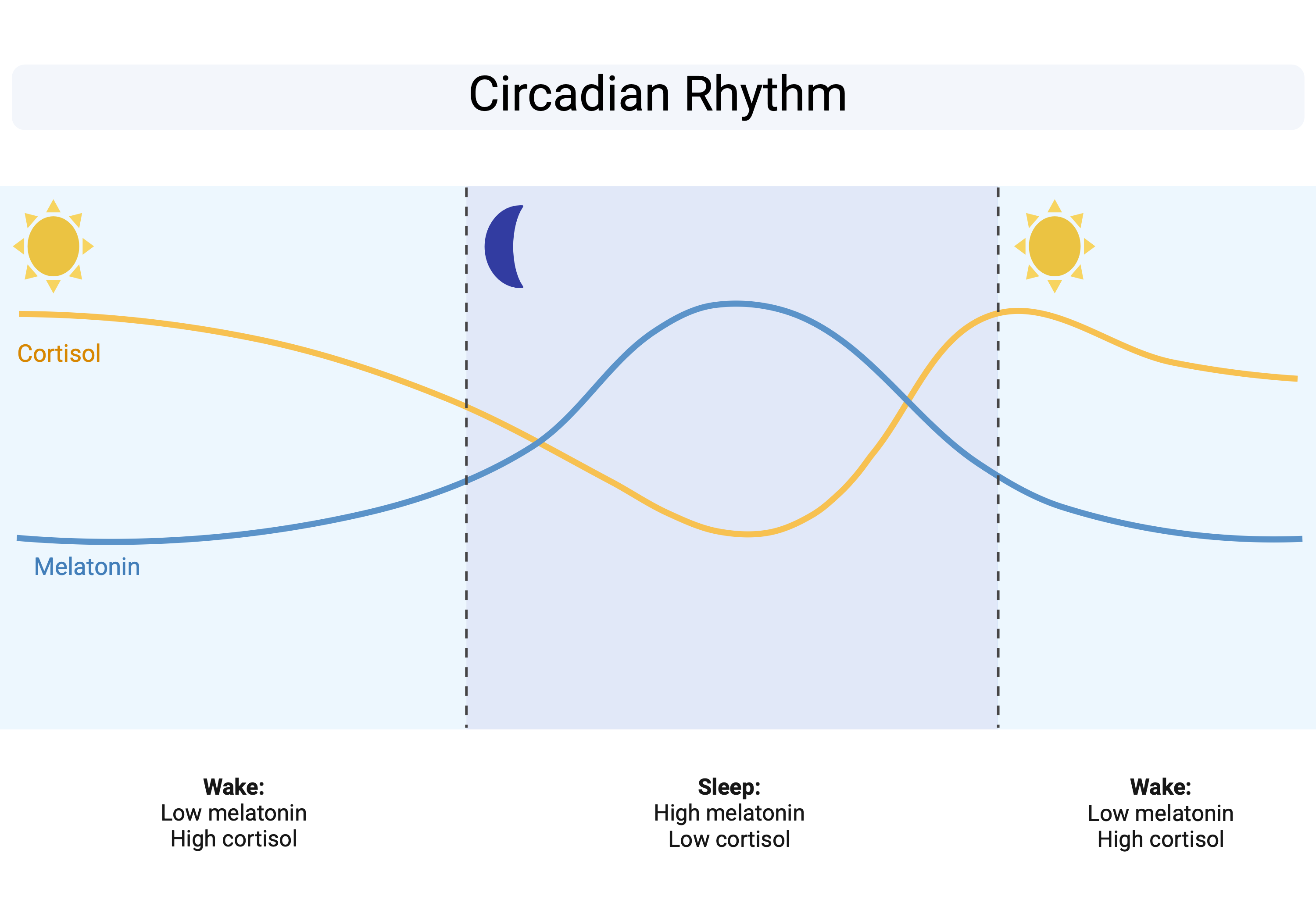
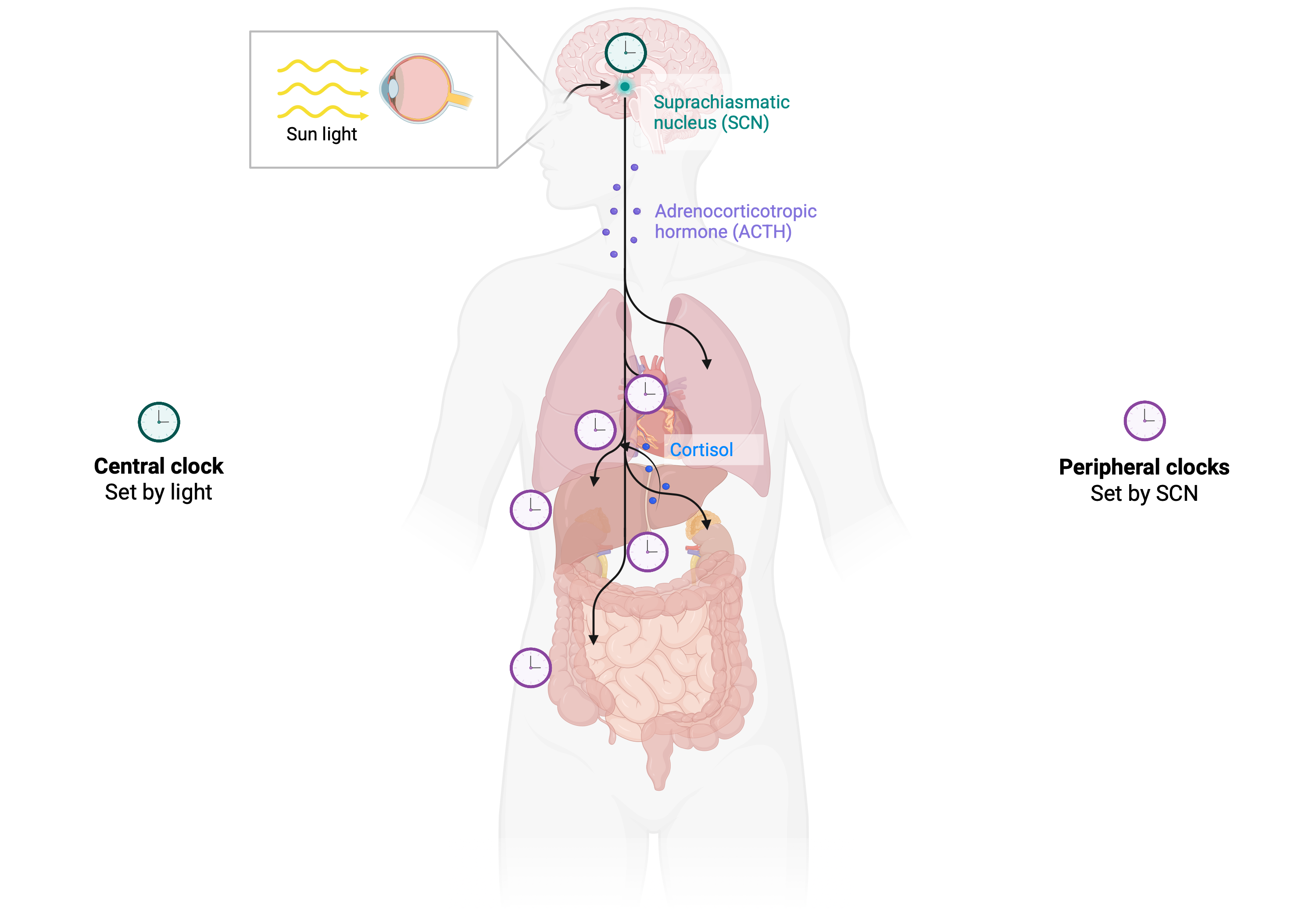
The circadian rhythm is governed by an internal pacemaker - the suprachiasmatic nucleus (SCN) of the hypothalamus - and external cues, the most important of which is light, followed by meals and social activity.
Regulation of Sleep - the Melatonin Pathway
When light is present, photosensitive melanopsin-containing retinal ganglion cells (mRGCs) in the eye become activated. These cells stimulate the retinohypothalamic tract (RHT), which in turn signals the suprachiasmatic nucleus (SCN). The activated SCN inhibits the sympathetic pathway leading to the pineal gland, and as a result melatonin release is suppressed5.
When light is absent, this chain reverses. The mRGCs are no longer activated, so stimulation of the RHT ceases and the SCN switches over to its intrinsic pacemaker activity. With the sympathetic pathway now disinhibited, norepinephrine is released at the pineal gland, triggering the secretion of melatonin and inducing sleep5.
Regulation of Wakefulness - the Cortisol Pathway
Overnight, the SCN's internal pacemaker activates the hypothalamus, which releases corticotropin-releasing hormone (CRH). CRH signals the pituitary gland to release ACTH, which in turn prompts the adrenal glands to release cortisol. Cortisol levels peak at roughly 6–8 AM, promoting wakefulness and energy mobilisation, then gradually decline throughout the day before reaching their nadir around midnight5.
Sleep Hygiene
Good sleep depends on good sleep hygiene3. The core principles are:
- Maintain a regular sleep schedule.
- Avoid caffeine in the 10 hours before sleep.
- Avoid large meals in the 3 hours before sleep.
- Optimise your bedroom environment - dark, cool, and quiet.
- Follow a wind-down routine in the 30 minutes before bed.
A Regular Sleep Schedule
This is the single most important factor - and arguably the foundation of everything else. A consistent schedule influences not only the quality of your sleep but also how easily you fall asleep at night and wake up in the morning. Ideally, your body adapts to your schedule so well that you wake up without an alarm, feel recovered and energised, and fall asleep within minutes. None of this is possible without consistency.
Caffeine
Caffeine has a half-life of roughly 5 hours, which means a meaningful amount remains in your system long after you drink it. Cutting off intake about 10 hours before bed minimises the risk that caffeine will interfere with your ability to fall asleep or stay asleep.
Meals
Eating a large meal too close to bedtime can affect both sleep quality and how quickly you fall asleep. A useful starting range is 3–5 hours before bed - experiment within that window to find what feels best for you.
Bedroom Environment
Your sleeping environment has a measurable impact on sleep quality. The ideal bedroom is:
- Cool - around 18 °C.
- Dark - block out as much light as possible.
- Quiet - unexpected noise can wake you and reduce sleep quality even if you don't fully remember waking.
Wind-Down Routine
A short wind-down routine can significantly reduce sleep latency by helping you shift into a relaxed state. This is also where consistency comes back into play: your body loves routine, and a repeated pre-sleep ritual signals that it's time to stop thinking about work or problems and start preparing for rest. For anyone who struggles to fall asleep, a wind-down routine can make a real difference - but only when paired with a regular sleep schedule.
Sleep - Foundational Principles
Let's start by answering the question of what sleep actually is. Sleep is a physiologically recurring state of rest characterised by altered consciousness and inactivity of voluntary muscles.
When it comes to the architecture of sleep, there are three distinct terms you need to know:
- Sleep cycle
- Sleep phase
- Sleep stage
Sleep occurs in repeating cycles. A proper night's sleep typically consists of 4–5 sleep cycles of 90–120 minutes each. Within each cycle there are two phases: a non-REM (NREM) phase and a REM phase. Sleep stages are distinct periods within those phases, defined by specific EEG patterns and physiological changes. NREM sleep is divided into three substages (N1, N2, N3), while REM sleep functions as both a phase and a stage2..
One additional term is worth knowing: sleep latency - the time it takes to fall asleep once you are in bed with the lights out. It is measured in minutes, with 3–20 minutes considered normal.
Brain Waves and the EEG
An EEG (electroencephalogram) is a recording of the fluctuations in electrical activity at different points in the brain. There are five brain wave types an EEG can measure:
Sleep Phases and Stages
A classic sleep cycle progresses through the following stages:
Awake - alpha and beta waves.
NREM sleep
- Stage N1 - theta waves; the transition from wakefulness to sleep.
- Stage N2 - theta waves; light, stable sleep.
- Stage N3 - delta waves; deep, slow-wave sleep.
REM sleep
- Stage R - alpha waves and beta waves. Characterised by rapid eye movements, vivid dreaming, and atonia of voluntary muscles.
NREM and REM stages alternate in 80- to 120-minute cycles. As the night progresses, each successive cycle contains more REM sleep and less N3. Overall, the largest share of the night - roughly 50% - is spent in N22.
The Circadian Cycle
The circadian rhythm is the body's 24-hour internal clock. It regulates cycles of alertness and sleepiness by responding to changes in environmental light.
At a basic level, two hormones drive this rhythm:
- Melatonin
- Cortisol
During the night, melatonin levels rise to facilitate sleep and fall again before waking. Cortisol stays low through the night and rises sharply just before waking, peaking during the first two hours after you wake up and gradually declining over the rest of the day1.
The circadian rhythm is governed by an internal pacemaker - the suprachiasmatic nucleus (SCN) of the hypothalamus - and external cues, the most important of which is light, followed by meals and social activity.
Regulation of Sleep - the Melatonin Pathway
When light is present, photosensitive melanopsin-containing retinal ganglion cells (mRGCs) in the eye become activated. These cells stimulate the retinohypothalamic tract (RHT), which in turn signals the suprachiasmatic nucleus (SCN). The activated SCN inhibits the sympathetic pathway leading to the pineal gland, and as a result melatonin release is suppressed5.
When light is absent, this chain reverses. The mRGCs are no longer activated, so stimulation of the RHT ceases and the SCN switches over to its intrinsic pacemaker activity. With the sympathetic pathway now disinhibited, norepinephrine is released at the pineal gland, triggering the secretion of melatonin and inducing sleep5.
Regulation of Wakefulness - the Cortisol Pathway
Overnight, the SCN's internal pacemaker activates the hypothalamus, which releases corticotropin-releasing hormone (CRH). CRH signals the pituitary gland to release ACTH, which in turn prompts the adrenal glands to release cortisol. Cortisol levels peak at roughly 6–8 AM, promoting wakefulness and energy mobilisation, then gradually decline throughout the day before reaching their nadir around midnight5.
Sleep Hygiene
Good sleep depends on good sleep hygiene3. The core principles are:
- Maintain a regular sleep schedule.
- Avoid caffeine in the 10 hours before sleep.
- Avoid large meals in the 3 hours before sleep.
- Optimise your bedroom environment - dark, cool, and quiet.
- Follow a wind-down routine in the 30 minutes before bed.
A Regular Sleep Schedule
This is the single most important factor - and arguably the foundation of everything else. A consistent schedule influences not only the quality of your sleep but also how easily you fall asleep at night and wake up in the morning. Ideally, your body adapts to your schedule so well that you wake up without an alarm, feel recovered and energised, and fall asleep within minutes. None of this is possible without consistency.
Caffeine
Caffeine has a half-life of roughly 5 hours, which means a meaningful amount remains in your system long after you drink it. Cutting off intake about 10 hours before bed minimises the risk that caffeine will interfere with your ability to fall asleep or stay asleep.
Meals
Eating a large meal too close to bedtime can affect both sleep quality and how quickly you fall asleep. A useful starting range is 3–5 hours before bed - experiment within that window to find what feels best for you.
Bedroom Environment
Your sleeping environment has a measurable impact on sleep quality. The ideal bedroom is:
- Cool - around 18 °C.
- Dark - block out as much light as possible.
- Quiet - unexpected noise can wake you and reduce sleep quality even if you don't fully remember waking.
Wind-Down Routine
A short wind-down routine can significantly reduce sleep latency by helping you shift into a relaxed state. This is also where consistency comes back into play: your body loves routine, and a repeated pre-sleep ritual signals that it's time to stop thinking about work or problems and start preparing for rest. For anyone who struggles to fall asleep, a wind-down routine can make a real difference - but only when paired with a regular sleep schedule.
Explore The Library
Get access to comprehensive content on performance, nutrition, and health — including current articles, training guides and practical protocols.